
Guides & Materials
How to Clean and Care for Your Countertops: Quartz, Acrylic, Granite, and Laminate
November 5, 2026 · Steinegg Cabinets, Nelson BC
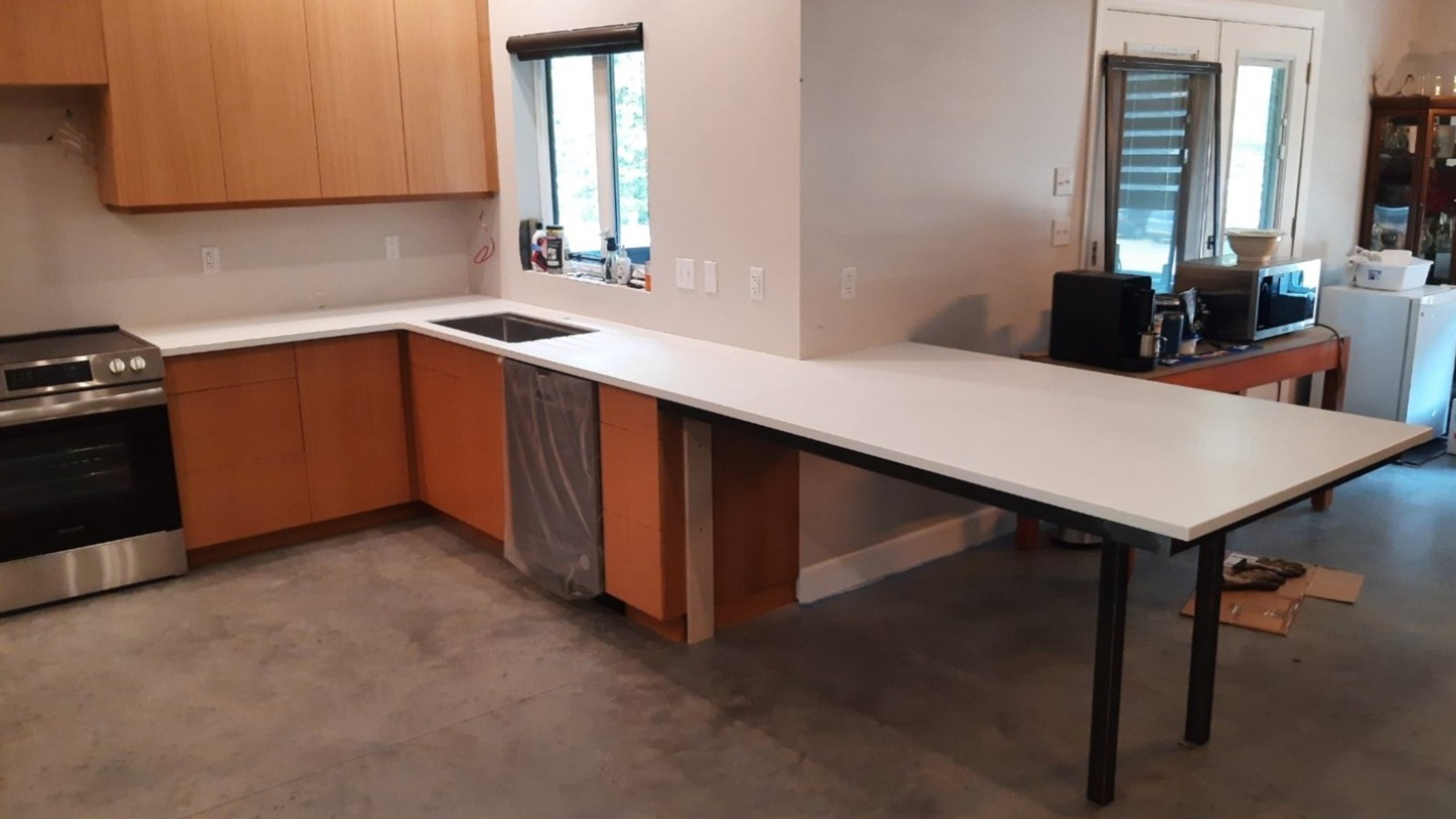
How to Clean and Care for Your Countertops: Quartz, Acrylic, Granite, and Laminate
If you just set a hot pan down on your quartz and now there's a cloudy ring that won't wipe off, or you're staring at a dull patch on the granite where a lemon sat too long — you're not alone, and it's not always fixable the way you'd hope. The short version: every countertop material has one or two things that actually hurt it, and the rest is just common sense. The trick is knowing which rule applies to your material, because the rules are different for each one, and a habit that's totally fine on laminate can leave a permanent mark on granite.
We get asked about this constantly — usually right after someone's installed a new counter and wants to keep it looking that way, or right after something's already gone wrong. This is the companion piece to our cabinet door cleaning guide — fronts and counters get dirty the same way but need different handling, and mixing up the rules is how people damage one while trying to protect the other.
Quartz: tough, but the resin is the weak point
Quartz countertops are engineered — crushed stone bound with resin — which makes them non-porous. That's the big advantage: no sealing, ever, and they don't stain the way natural stone can. In our shop, quartz is usually the "lowest maintenance" answer we give people who don't want to think about their counters.
But the resin in quartz is also exactly where it's vulnerable:
- Heat is the number one killer. A hot pan straight off the stove, a slow cooker left running, even a hot curling iron — these can discolor or crack the resin, and it's permanent. There's no buffing a heat mark out of quartz. Always use a trivet. We tell every client this at handover and most people forget within a year — don't be that person.
- Strong chemicals dull the shine. Oven cleaner, bleach, drain cleaner, anything with a very high pH, etches the surface finish over time. Daily cleaning is just warm water and mild dish soap, or a dedicated stone-safe cleaner — you don't need anything stronger.
- Don't cut directly on it. It's hard on your knife edges even if the surface itself usually survives. Use a board.
- Wipe up spills reasonably promptly, especially wine or citrus, though quartz is far more forgiving here than granite.
Acrylic solid surface: the repairable one
This is the material people underestimate. Acrylic solid surface (branded versions like Corian are the best known) is seamless — no grout lines, no visible joints — and because it's a consistent material all the way through, not just a surface layer, scratches, scuffs, and even some burns can be sanded and buffed right back out. That's the real selling point, and it's the one thing that makes acrylic genuinely different from every other option on this list: a mistake doesn't have to be permanent.
That doesn't mean it's bulletproof:
- It's still heat-sensitive. Use trivets. A surface burn can often be sanded down by a solid-surface repair pro, but it's easy to make a scratch worse with the wrong grit or technique — if it's visible and bothering you, get in contact with us before taking sandpaper to it yourself.
- Daily cleaning is simple — mild soap and water, or a basic household cleaner. Avoid acid-based drain or oven cleaners.
- Matte and satin finishes show scuffs more than gloss, but they're also easier to refresh since there's less sheen to match. With a gloss finish you see finger prints easier than with a matte finish.
Granite: beautiful, and it needs upkeep
Granite is natural stone, which means it's porous — unlike quartz or acrylic, it needs periodic sealing to resist staining, and the sealer is a wear item, not a one-time thing.
- Acids are the enemy here, not heat. Granite actually handles hot pans better than quartz or laminate. But vinegar, lemon juice, and a lot of "natural" cleaners are mildly acidic and can etch the surface, leaving a dull spot where the polish used to be. Tomato sauce and citrus left sitting are common culprits. Wipe those up promptly.
- Sealing frequency depends on your stone and your sealer — lighter, more porous granites typically need it more often than dense, dark ones, and a busy kitchen wears through sealer faster. We don't quote a blanket interval because it genuinely varies; we go over your specific stone at handover. A simple home check: put a few drops of water on the surface — if it darkens within a few minutes, it's time to reseal.
- Daily cleaning is warm water and mild soap, or a pH-neutral stone cleaner. Skip the vinegar-and-water combo recommended everywhere online — it's genuinely bad advice for granite specifically.
- Light etching sometimes buffs out with a polishing compound; deeper etching needs a professional to re-polish that section.
Laminate: budget-friendly, but water at the seams is the real risk
Laminate gets a bit of a bad reputation, but a well-installed laminate counter holds up fine for years — the issue isn't the surface itself, it's what happens at the edges.
- Standing water at seams and around the sink cutout is what actually kills laminate, not everyday wiping. The surface laminate is bonded to a particleboard core underneath, and if water gets past the seam or the cutout edge and into that core, it swells and the damage doesn't reverse. Wipe up standing water around the sink rather than letting it sit, and don't leave a wet dish rag balled up on the counter overnight.
- No abrasives. Scouring pads, steel wool, and abrasive powders will scratch the surface and leave it looking worn even if nothing's structurally wrong. Mild soap and a soft cloth is all you need.
- Check the caulk line around your sink periodically and recaulk it if it's cracked or missing anywhere — that bead is doing more work than people realize.
Quick reference: what to watch for
| Material | Biggest threat | Needs sealing? | Can damage be fixed? |
|---|---|---|---|
| Quartz | Heat (resin damage) | No | Rarely — heat marks are usually permanent |
| Acrylic solid surface | Heat, deep scratches | No | Often — sanding/buffing can restore the surface |
| Granite | Acids (etching) | Yes, periodically | Light etching sometimes buffs out; deep etching needs a pro |
| Laminate | Standing water at seams/cutout | No | No — water damage to the core is not repairable |
If you only remember one thing per material: trivets for quartz and acrylic, no vinegar on granite, and keep water off the seams on laminate.
Choosing between these materials in the first place
If you're still deciding which way to go rather than maintaining what you already have, we've written about how these four materials actually compare for cost, looks, and durability side by side. And if your counters are original to a Kootenay house from a few decades back, there's a reasonable chance refacing or replacing the cabinets around them is a bigger win than swapping the countertop alone — worth a look at our cabinet refacing guide before you commit to a full kitchen overhaul.
FAQ
Can I use vinegar and water to clean my countertops? It's fine on laminate and generally okay on quartz and acrylic in small amounts, but skip it on granite — the acid can etch the polished surface over time, even diluted.
How do I know if my granite needs resealing? Put a few drops of water on the surface and watch it. If it beads up and sits for a while before soaking in, the sealer's still doing its job. If it darkens the stone within a few minutes, it's time to reseal.
Will a hot pan ruin my quartz countertop? It can, and it's one of the few things about quartz that's genuinely not forgiving — the resin binder discolors or cracks under sustained heat, and that damage doesn't come out. Trivets are cheap insurance.
Can scratches in my solid surface counter be fixed? Usually, yes — that's the material's main advantage. Light scratches can often be buffed out, and even some burns and cuts can be sanded down by a solid-surface repair specialist. Deep damage or cracks are a bigger job, so it's worth getting a professional opinion before attempting it yourself.
My laminate counter feels soft or swollen near the sink — is that fixable? Not really, if water has gotten into the particleboard core underneath. That section usually needs to be replaced. Catching a failing caulk line or a slow drip early is the best way to avoid it happening in the first place.
Not sure what you're working with, or want an honest read on whether your current counters are worth keeping as part of a bigger kitchen update? Get in touch and we're happy to take a look, or browse our services to see what we build.
Planning a project in the Kootenays?
Talk it through with a local shop — free consultation, honest advice, built-to-fit cabinetry from Nelson, BC.