
Guides & Materials
Melamine Particleboard vs. Birch Plywood Cabinet Boxes: What We Actually Build With
July 10, 2026 · Steinegg Cabinets, Nelson BC
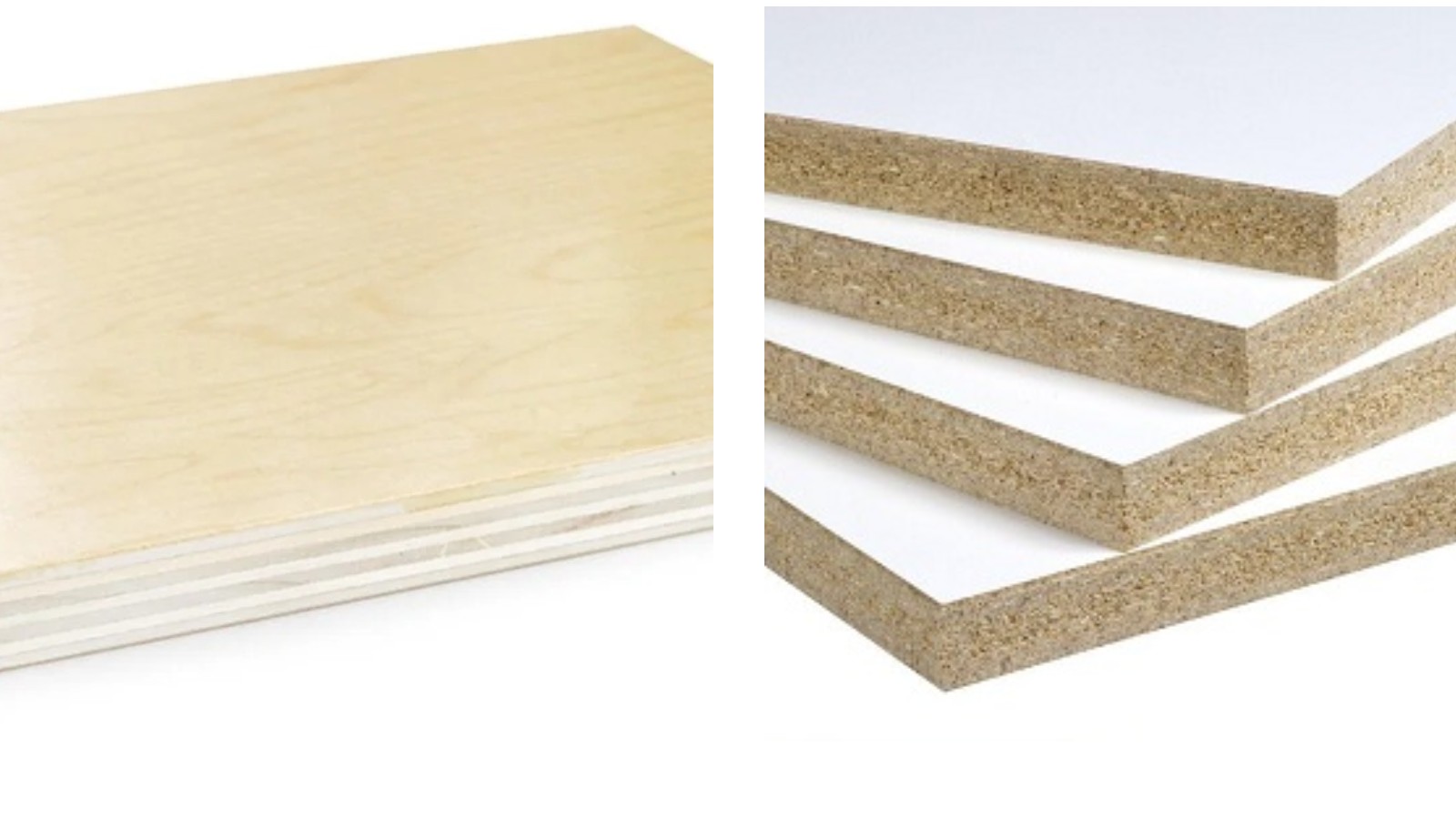
Short answer: if you want the cabinet boxes to still be square and swing right in twenty years, birch plywood is the better material. If you want a good-looking kitchen at a price that doesn't wreck the budget, melamine-faced particleboard is a completely reasonable choice — as long as you know what you're actually buying. We build with both in our shop, and which one goes in your kitchen usually comes down to your budget and how long you plan to own the house, not which one is "better" in some absolute sense.
First, let's clear something up
A lot of what you'll read online treats "melamine" and "particleboard" as two different materials going head to head with plywood. They're not. Melamine is a thin, hard resin surface — it's what gets fused onto the face of a panel. Underneath that melamine skin, the core is almost always particleboard (sometimes MDF for doors and panels that need a smoother edge). So the real comparison isn't melamine vs. plywood. It's:
- Melamine-faced particleboard — particleboard core, melamine skin on both faces, usually with a matching PVC or melamine edge tape.
- Birch plywood — cross-laminated wood veneers, which we then finish with either a melamine face, a wood veneer face, or paint, depending on the job.
You can actually get a plywood box with a melamine interior finish, or a particleboard box that looks identical from across the room. The material that's doing the structural work is hidden behind the same white or grey interior either way. That's the part showrooms don't always explain, and it's worth asking about when you're comparing quotes.
Where the two actually differ
Weight and screw-holding. Particleboard is made of compressed wood chips and glue. It's heavier per sheet than plywood and it does not hold a screw well once you've driven it in and backed it out — the fibers just don't have the tensile strength of real wood grain. Plywood holds screws, hinges, and drawer slide hardware far better, which matters most on anything that gets used hard: pull-out drawers, heavy upper cabinets, anything getting reinstalled or adjusted down the road.
Moisture. This is the one that actually bites people in this climate. Particleboard swells when it gets wet and it doesn't recover — once the edge of a toe-kick panel or the bottom of a sink base has taken on water, it stays swollen. Plywood's cross-grain layers resist that kind of swelling and generally hold their shape even after getting damp, though it's not waterproof either. In a Nelson-area house running a wood stove all winter, humidity swings hard — bone dry in January, then a big jump every time you're running pots on the stove or drying wet gear by the door. That swing is harder on particleboard cores than on plywood, especially at sink bases, dishwasher surrounds, and mudroom cabinetry where damp boots and wet dog towels live.
Chipping. Melamine surfaces — on either core — chip at cut edges and corners if they're mishandled, and repairing a chip means patching or replacing the panel, not sanding it out. Plywood edges that get dinged can usually be touched up or re-veneered because there's real wood under the surface.
Cost. This is where melamine particleboard earns its place. A particleboard box typically runs meaningfully less than an equivalent plywood box — the exact gap depends on species, finish, and the shop, but it's usually somewhere in the 20-40% range on box cost alone. For a full kitchen, that's a real difference, and it's why particleboard is the default in most production and semi-custom cabinetry, not just a corner someone's cutting.
What we actually build with
In our shop, plywood is the standard box material for kitchens — sink bases, anywhere near a dishwasher, and anywhere getting heavy daily use. For upper cabinets, closets, and lower-traffic builds like a laundry room or a home office, melamine-faced particleboard is often the more sensible spec, and we'll say so rather than upsell you into plywood everywhere. If budget is tight, a common approach we use is plywood at the sink and dishwasher bays with particleboard everywhere else in the run — you get the moisture protection where it actually matters and save money on the boxes that will never see a drop of water.
What we won't do is put a client into full particleboard construction and call it the same as plywood, or vice versa oversell plywood into a dry, low-use cabinet where it won't earn its cost. Have a look at some of our completed kitchen and cabinetry work if you want to see how we've mixed materials on real builds, and check our shop and services page for how we spec projects before a quote goes out.
Which one should you pick?
If you're renovating a forever home, or you cook a lot and run your kitchen hard, spend the money on plywood boxes, at minimum at the wet zones. If this is a rental, a flip, or a kitchen you expect to redo again within 10-15 years, melamine particleboard will look just as good on move-in day and save you real money. Either way, ask your cabinet shop what's actually under the melamine face on the quote you're holding — "melamine" alone doesn't tell you.
FAQ
Is melamine cabinetry actually lower quality, or just cheaper? Cheaper isn't the same as low quality. A well-built particleboard box with tight tolerances and properly sealed edges will serve most kitchens fine for a decade or more. It's a different tier of durability than plywood, not a defective one.
Can I mix plywood and particleboard boxes in the same kitchen? Yes, and it's common. Plywood at the sink base and dishwasher bay, particleboard elsewhere, is a normal spec — the finished cabinets look identical from the outside.
Does melamine hold up to Kootenay winters and wood-stove heat? The surface itself is fine — melamine doesn't care about dry air. The concern is the particleboard core underneath swelling if it gets wet, and dry heat can also loosen glue joints over many years on lower-grade particleboard. Plywood is more forgiving of both.
How much more does plywood actually cost? It depends on the run and finish, but expect roughly 20-40% more on box cost versus particleboard for a comparable cabinet. Ask for a quote broken out by material so you can see the real gap for your project.
Can a swollen particleboard panel be repaired? Not really — once particleboard has swollen from water, it stays swollen. The panel usually needs to be replaced, which is one more reason to spec plywood at sink bases and anywhere else water is likely to land. If you're planning a kitchen and want a straight answer on what's right for your project and budget, get in touch and we'll walk through it.
Planning a project in the Kootenays?
Talk it through with a local shop — free consultation, honest advice, built-to-fit cabinetry from Nelson, BC.