
Guides & Materials
Cabinet Hardware in Kootenay Kitchens: What's Actually Worth Upgrading For
October 22, 2026 · Steinegg Cabinets, Nelson BC
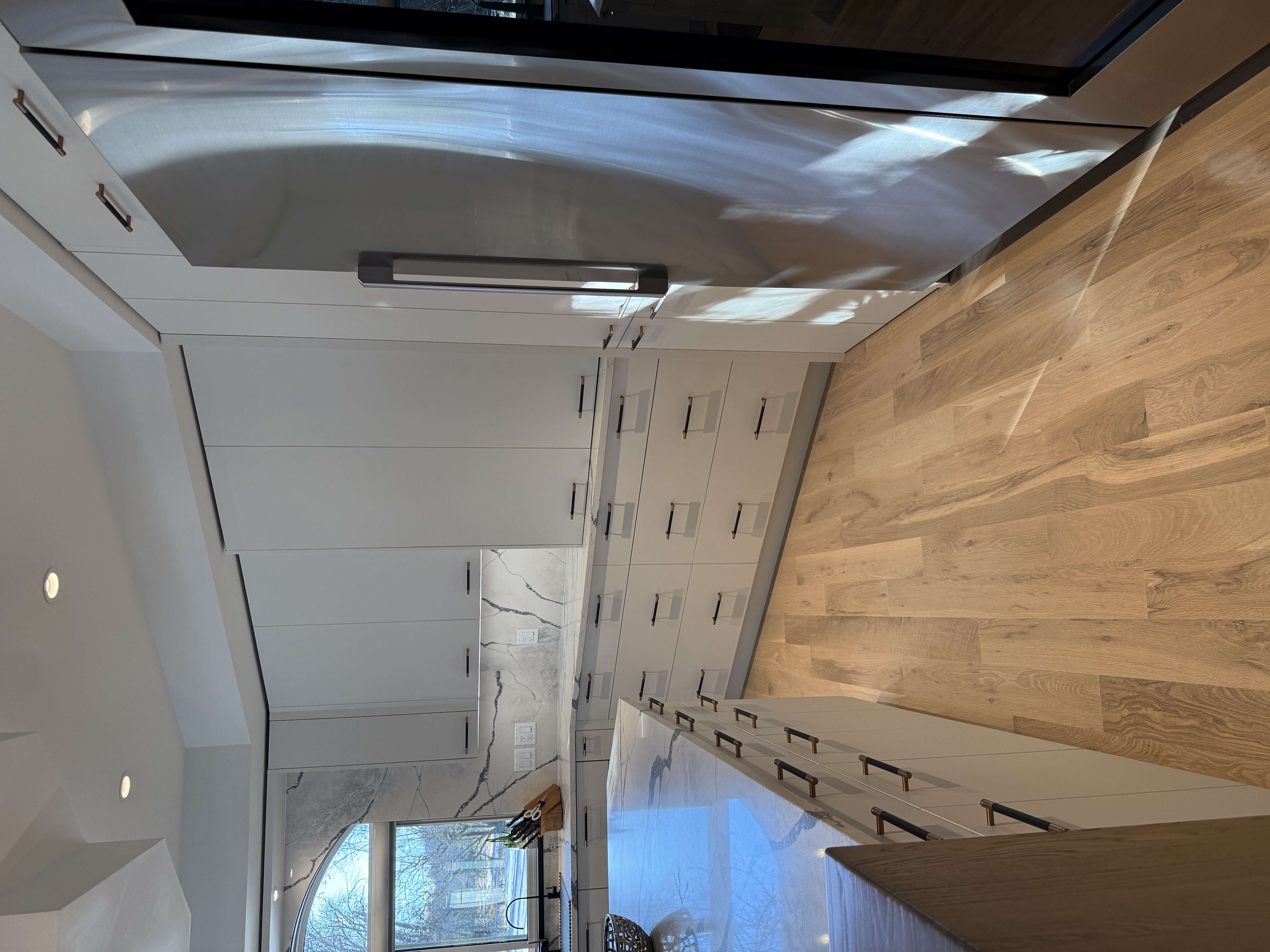
Cabinet Hardware in Kootenay Kitchens: What's Actually Worth Upgrading For
If you're staring at a hardware catalog wondering whether to spend $4 a knob or $28 a knob, here's the short version: from an operational perspective the hinges and slides matter more than the knobs, the material matters more than the finish name, and almost nothing you pick at the hardware stage will make or break the kitchen the way the box construction already has. Past that, it's mostly about what you touch every day and how much that touch should feel like nothing.
We install a lot of hardware in our shop — some of it client-supplied, some of it ordered through our suppliers — and we see which pieces hold up five winters in and which ones start rattling, pitting, or sagging. Here's what we've actually learned, not what a catalog says.
Knobs vs. Pulls: Less About Looks Than About Load
The style debate (modern bar pulls vs. traditional knobs) is personal taste and we're not going to talk you out of either. But there's a practical reason pulls dominate on drawers and knobs dominate on doors: a pull is anchored at two points, so the pulling force spreads across the drawer front instead of concentrating on one screw. On a drawer you open 20 times a day — cutlery, Tupperware, the junk drawer — that matters. A single knob on a heavy, fully-loaded drawer will eventually work its screw loose.
Doors don't take the same abuse, so a knob holds up fine there, and it's usually cheaper per piece. Mixing knobs on doors with pulls on drawers is the most common combination on the market, and it's common for a reason.
One thing people miss: handing is not optional on doors. If your doors are a mix of left- and right-hung, knob placement needs to be planned before drilling. Ideally we can plan that out prior to building the cabinets as we can machine the holes for the pulls in our shop before the cabinets are delivered to you.
Finish: The Material Does the Work, Not the Name
"Finish" sounds like it's about color, but durability is mostly about the base material underneath the plating. Solid brass, solid stainless steel, and good zinc-alloy castings resist corrosion and don't go soft at the mounting screws. A thin chrome or bronze plating over a cheap pot-metal base looks identical on day one and starts flaking or greening within a couple of years — especially here, where houses swing between bone-dry heated winter air and damp spring thaw, and a lot of homes still run a wood stove that puts a film of soot-tinged moisture on anything near the kitchen.
If you want hardware that shows its age gracefully instead of just failing, living finishes like unlacquered brass are worth considering. They'll darken and spot with fingerprints and water over time — some people love that patina, some people find it looks dirty. We tell clients: if you're not going to enjoy watching it change, don't buy unlacquered anything, in hardware or countertops.
Matte and textured finishes (matte black, brushed nickel, brushed brass) hide fingerprints and water spots far better than anything polished or glossy. If you've got kids, dogs, or a household that comes in from skiing with wet gloves half the year, that's not a minor styling note — it's the difference between wiping down hardware weekly and never thinking about it.
Hinges and Slides: The Part Nobody Looks At and Everybody Feels
This is where we'd actually tell you to spend the money if you're choosing where to spend it. Hinges and drawer slides are mechanical parts under constant load, and the gap between a good one and a cheap one isn't cosmetic — it's whether the door sags in two years or still closes square in fifteen.
A few things we look at:
- Full-extension vs. three-quarter slides. Three-quarter extension is cheaper and fine for a lot of cabinets, but if a drawer holds pots, small appliances, or anything you need to see the back of, full-extension slides (so the whole drawer box clears the cabinet) are worth the extra cost every time.
- Weight rating. Heavier slides and hinges are rated for more weight before they start to droop. A drawer full of cast iron pans on an undersized slide will sag at the front within a few years, even if it closes fine on day one. The better ones are also tested for up to 100,000 opening and closings. That is a lifetime of smooth operation with very little maintenance if any at all.
- Soft-close vs. standard. Soft-close hydraulics add real cost — budget roughly $15–25 in parts per drawer for a DIY retrofit, more like $40–100 per drawer for a professional retrofit, and a meaningful premium built into new cabinets. It is genuinely nice to live with, especially in a kitchen where drawers get slammed by kids or by someone's hands full of grocery bags. But it's also one more mechanism that can wear out or feel finicky to adjust, and on a tight budget, we'd rather put that money into a better basic slide than a cheap soft-close mechanism bolted to a cheap slide.
- Brand consistency within one kitchen. Mixing hinge brands across a single kitchen is asking for future headaches — replacement parts, adjustment hardware, and hole patterns aren't universal. If you're doing a partial renovation and keeping some existing cabinets, tell your cabinetmaker up front so hinges get matched, not improvised.
What We'd Actually Spend More On (And What We Wouldn't)
We sell both the cheap option and the expensive option, so we don't have a reason to push you toward one. Here's the honest version:
Spend more on: drawer slides under anything heavy, hinges on frequently used doors, and anything exposed to damp — under-sink cabinets, a mudroom bench seat, a bar or wet area.
Don't stress over: hardware finish trends. Matte black is everywhere in 2026 the way brushed nickel was a decade ago, and it'll look dated in its own time regardless of quality. Buy what you like now; a $6 knob and a $26 knob in the same finish family will look the same from across the kitchen.
Ordering Hardware in the West Kootenay
Here's the part that's specific to building here rather than in a big city: hardware lead times bite harder when you're two to six hours from the nearest full-stock supplier, and a lot of the nicer lines (certain Blum configurations, specialty finishes, anything made to order) get backordered from the manufacturer regardless of where you live. We build hardware lead times into our project timelines the same way we plan around slab delivery, and if a client falls in love with a hardware line that's six weeks out, we'd rather tell them that in week one of the project than week ten.
If you're ordering hardware yourself for a refacing job, order a sample of the exact finish before committing to 40 pulls — screen colors and catalog photos lie, and "brushed nickel" from two different manufacturers can look noticeably different side by side.
FAQ
Do I need to match hardware finish to my faucet and light fixtures? Not strictly, but it reads as more intentional when you do, or when you pick two finishes max and repeat them (say, brushed brass hardware with matte black fixtures). Three or four unrelated finishes in one kitchen usually looks accidental rather than layered.
Is soft-close worth it for a rental or flip? To me yes as it's valuable to me. It's a feature buyers notice and like, but it's not a dealbreaker either way, and cheap soft-close hardware on a flip timeline is one of the first things to go finicky under a new owner who doesn't know how to adjust it.
Can I retrofit soft-close onto my existing cabinets? Often, yes, with add-on dampers rather than full hinge replacement — but if your doors are particleboard or MDF with worn-out screw holes, a retrofit can turn into a bigger repair than expected. We check the box material before promising a clean retrofit.
How many pulls or knobs do I need per drawer? One centered knob or pull on drawers up to about 24" wide; two pulls spaced toward the edges on anything wider, both for looks and so the drawer doesn't rack when you pull it open from one side. However I don't recommend using two knobs on a wide drawer as you need two hands to open it.
What's the single upgrade you'd recommend to almost everyone? Full-extension, decent-weight-rated drawer slides on anything holding cookware. It's the one upgrade you'll notice every time you use the kitchen, and the one that's genuinely hard to retrofit well later.
Have a kitchen or built-in project where hardware decisions are part of a bigger plan? Get in touch or take a look at our cabinetry services — we're happy to talk through what's worth the upgrade and what isn't, for your specific cabinets and your specific household.
Planning a project in the Kootenays?
Talk it through with a local shop — free consultation, honest advice, built-to-fit cabinetry from Nelson, BC.